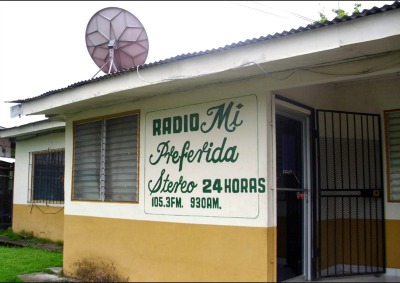
UPDATE - The radio show is currently paused (June 2016)
Recent transplants to Puerto Armuelles, Michael Butler and Beverley McAleese, have undertaken a new adventure. They will be hosting a weekly program at our local radio station “Radio Mi Preferida” (located behind Romero’s).
It is fun that our town is small enough, and simple enough, that you can still make a proposal for a radio program, do the necessary research for the show, find a way to cover costs (I am sure contributions will be welcome. Betsy and I have already pledged to contribute), and get the program on the air.
What is amazing is that in our little town of Puerto Armuelles, one of the co-anchors of the new radio show, Michael Butler, has 45 years of broadcast journalism experience in the private sector and with the CBC in Toronto, Ontario.
Michael’s roles in radio have included research, writing, and reading the news live on the air nightly. He has also produced newscasts for television that have aired nationally in Canada. He has interviewed presidents and prime ministers, beauty pageant winners and punk rockers. He even covered the 1976 Montreal Winter Olympics.
Michael’s wife and co-anchor of the new show, Beverley McAleese has a diverse background indeed. However, professional social work, and being of service to others, are a thread that runs throughout her career. Among Beverley’s social service projects have been working with battered women and women and their infants recovering from addictions, and creating a program for prostituted and trafficked women. Beverley received a Toronto YWCA Woman of Distinction Award in recognition of her career of service to the public.
While we are not familiar with the details of the upcoming radio show, Michael and Beverley have indicated that their half hour show, which airs each Wednesday at 4:30 PM, will touch on matters of spiritual significance, but without being Christian-focused, or reflecting the views of any particular belief structure or organization.
The topic of our spirituality, while living in an apparently carefree place like Puerto Armuelles, Panama is, no doubt, of significance to all of the expats here. Some of us have gotten together to discuss, or at least we are highly aware of, the challenges that arise when one makes the big decision to pick up stakes and move to Panama, only to discover that, just because we live in “paradise”, doesn’t mean that our lives are paradisical.
Ultimately, we all have to confront the same basic challenges that we faced before, in our “old lives” wherever it was that we were living. In fact, a number of Puerto Armuelles ex-pat residents have lived in a tropical paradise before, in Costa Rica, or elsewhere in the tropics. What on earth could cause one to leave paradise and move to another paradise ?(other than taking a bite of that forbidden apple, or mango)? My guess is that if the first paradise didn’t solve the problem, then the second (or third, or fourth) paradise is not going to do it either.
If none of this applies to you, congratulations, (I would like to read your book). However, if you are like most of us, then you are a “work in progress”, and you can probably learn something useful from Michael’s and Beverley’s program. Or call in, or email in something useful to add to the conversation.
I wrote abit about spiritual life in Panama in this post.
You can listen online or on an old school radio.
The radio station is Radio Mi Preferida Estero at 105.3 FM or 930 AM
Visit the radio station's website to listen online.
It's a weekly show on Wednesdays from 4:30 to 5pm.
Their first show is this coming Wednesday, May 4, 2016
I am sure they would appreciate you listening.
I don't know if you can contact them during the show, but if you can, the radio booth phone number is 770-7408.
Break a leg Beverley and Michael!
And thanks for taking on this new adventure.
[leadplayer_vid id="57261D0B32748"]
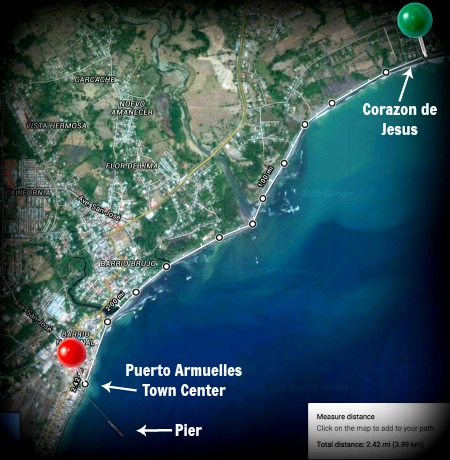
I had been thinking of doing it for awhile, but I finally shook off my laziness and did it. And I took my daughter along for the ride.
We are both happy we did it.
According to Google, it is 2.42 miles from the Corazon de Jesus neighborhood to downtown Puerto Armuelles.
I cannot tell you how long it took since we stopped so very often, but I'm thinking if you were a little more focused on your destination you could do it in about 40 minutes.
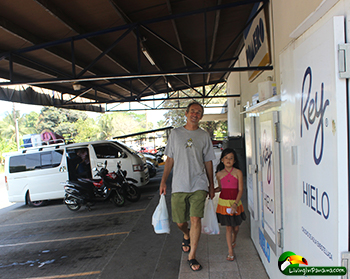
I am writing this in late March, the peak of the dry season, and the temperature can get pretty hot in these months (today there is a wonderful breeze blowing off the ocean, so it is not too hot). Since our house is not air conditioned, I sometimes find myself driving my wife’s air conditioned car to Romero’s supermarket (also air conditioned), possibly buying a local paper, and reading it at a leisurely pace, while I sip a Cappuccino (50 cents) in air conditioned bliss. When I am finished reading and sipping, I slowly wander through the aisles to choose my groceries in this comfortable, modern supermarket, before heading home to the family.
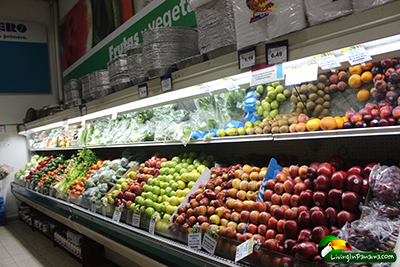
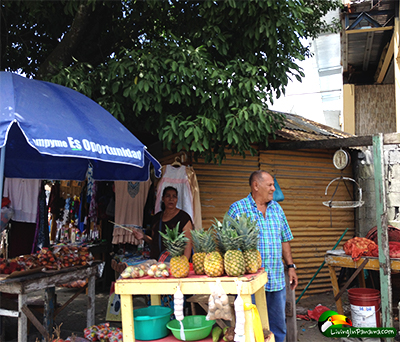
I know that I am paying more for groceries, particularly fresh produce at Romero’s than I would from one of the street vendors. Plus, the quality is not as good as it would be from the small street stalls, or pickup truck vendors who buy their produce directly from the farmers. They don’t take the produce to a central distribution center, as Romero’s does, before bringing it to Puerto Armuelles.
I have come to realize that, during the cooler, “rainy season” I go to Romero’s far less frequently. (FYI the rainy season is from mid-April to mid-December.) Most days in the rainy season, I ride my bike to run errands around town. Then, I avoid the modern supermarket. My family tends to eat more healthfully, and our grocery bills are much lower.
But this article is not about our Rainy Season-Dry Season climate here in Panama. It is about how you can save about 50% on your grocery bill, as well as eating a much healthier diet, if you buy your produce from the street vendor rather than going to Romeros or another
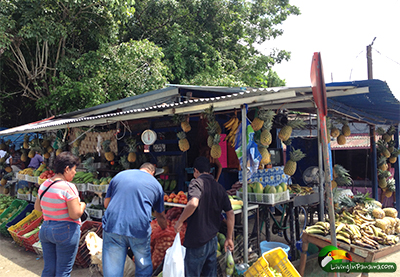
Supermaercado.
(If you do want to know about the weather in Panama, Betsy wrote about it here.)
The best days to shop are on dias los jubilados, which is when retired folks all over Panama line up to receive their semi-monthly social security check. On those days the number of vendors and the variety of items for sale skyrocket.
Find out about Chiriqui's Organic Farm, Finca Santa Marta. They deliver organic produce to you here in Puerto Armuelles and throughout Panama. The info is under Tip #2, Eat Healthfully & Locally.
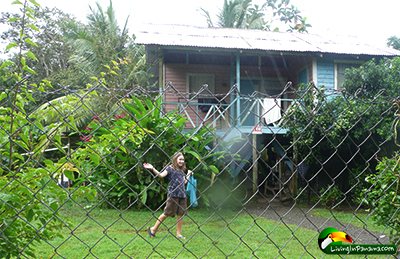
In addition to great value on super fresh produce, you can also save a bundle by purchasing fresh-caught fish from local fish buyers in Puerto.
There are several neighborhoods where a local wholesale fish buyer buys from the fishermen and will sell to you at very reasonable prices.
For example, you can always find fresh:
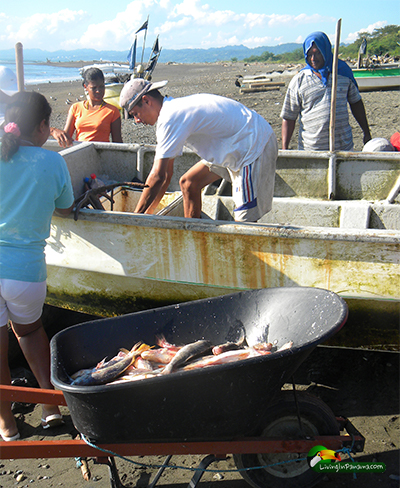
I suppose that you could try to buy directly from the fishing boat, but I have a feeling that this would not go over well with the fish buyer. Generally, all fish in the neighborhood fishing fleet are sold to one or two buyers. They get a consistent product, and they provide a consistent market for the fishermen.
Of course you also run into people trying to sell you seafood out of a bag - with no ice - I always say no to that.
Watch a video of buying fish fresh off the boat in Puerto Armuelles.
You can also buy both beef and pork from local ranchers, and save a bundle. You might have to buy an entire side, or quarter of a steer, or pig, but if you ask around, you can usually find some one to go in on the purchase. But to do that successfully, you will need to purchase a dedicated freezer to store your meat.
One neighbor of ours frequently raises a pig for his family’s own personal use. He has also built a smoker, so that he can custom smoke his own bacon, and he stuffs his own, custom smoked and seasoned pork sausage. Neighbors and friends who get on his “list” early can enjoy the same great quality pork products.
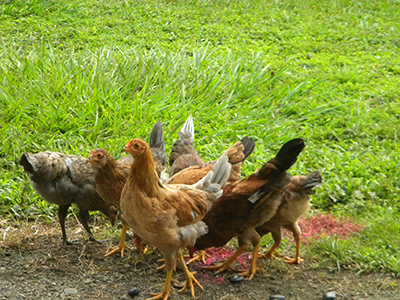
I was surprised to find that free range chickens (gallina de patio) tend to cost much more than commercially raised chickens. While a whole chicken at Romero’s, if you can find one, might cost $6 or $7, a family raised, free range bird might run as much as $13, o$14. Once I discovered just what effort it takes to raise a chicken, successfully, to adulthood, in and around one’s own yard, I understood.
As a side note, this short video below shows the challenges we had raising gallinas de patio. Of course, our daughter would never even think of us eating her chicken friends.
[leadplayer_vid id="5724C858929BD"]
The free range birds, are truly free range, and these will be the same birds that you have seen running around near the street (or in the street--- so drive carefully; “You killed it, you bought it”, as the saying goes.) When people have gallina de Patio to sell they will sometime announce that fact by posting a sign saying simply, Gallina de Patio. Ask around and you can find out who usually sells them.
Important Cooking Tip For Gallina de Patio
If you decide to buy one, you cannot cook it like you would a "regular"chicken. These birds are tough. Gallinas de Patio eats mostly bugs, and table scraps, and do not usually eat any commercial (read, hormone-fortified) feed. Thus they eat a lot more protein, very little grain, and no chemicals. They grow more slowly and get a lot more exercise than their caged counterparts. In short, these birds live a life that is a lot closer to that which a wild fowl might live. As a result, these chickens are leaner (stringier and tougher) and have a stronger, “gamier” flavor.
The first time our family tried one of these birds, we put it on the grill and basted it in barbeque sauce. We just assumed that a really “special” chicken should be cooked on the grill and enjoyed all by itself, so that the flavor could be experienced.
We were wrong.
It was like chewing on a moccasin. The free range gallina de patio is better slow cooked, in a stew pot, so that the meat has time to become tender, and so that all the rich flavor of the meat can infuse the entire stew. If you try this, you will quickly discover the superior flavor of the gallina de patio. It is a delicacy. This is what chicken used to taste like, before all the gallinas de patio were rounded up and packed 7 per cage in the mega “chicken farm”.
How to cook a Gallinas de Patio - for Sancocho, of course.
When you move to Panama, you find that you have a lot more free time on your hands. One satisfying way to spend part of your day is to shop for, and prepare the best quality food available. You will find that you can lose weight, improve your overall health, and save a bundle on your grocery bill at the same time by taking advantage of buying directly from small local producers and vendors.
Learn 4 essential tips for healthy living in Panama.
March 26, 2016 by Skylar Vayda and Betsy Czark
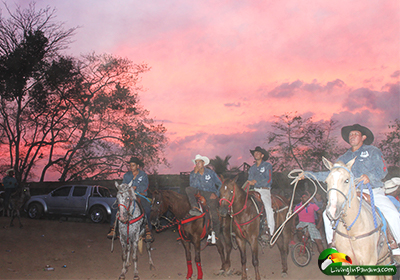
The Rodeo, or Pista de Lasso (as it is called in Panama) consists of lasso teams competing to lasso a calf in the shortest time possible. And definitely under 20 seconds, which is the maximum amount of time a cowboy has to lasso a calf within an 80 meter long space.
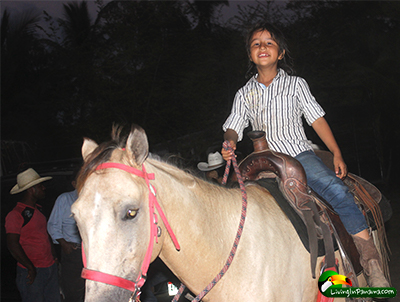
The rodeo begins at 11 am and goes into the evening. Because of this time frame, as the day progresses, some teams perform more poorly than others because one or more of their riders is drunk.
The rodeo's atmosphere is lively and at time intense, as the supporters of each team shout their encouragements. There is also a fair amount of unofficial bets being placed, so that may be something to look out for.
My (Skylar's) past experiences at the rodeo have been wonderful. I loved horses when I was younger. Because of that I especially enjoyed seeing the pure breed horses outfitted in their colorful harnesses. I went often when I was younger. I even owned my own lasso so I could practice. But I watched much more lassoing than I practiced.
The rodeo season is a large part of the culture in Panama. While in Panama you should definitely experience it at least once.
Puerto's Rodeo Schedule
Rodeos occur on 8 consecutive Sundays. The first rodeo was on March 6th.
The Pista de Lasso technically start at 10am, but usually don't get going until 11ish. Food and drinks are sold at the events.
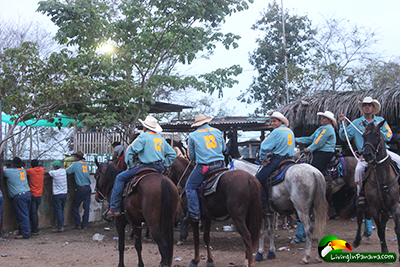
5 Remaining Competitions
March 27 - Location outside of Puerto Armuelles
April 3rd - Casa de Puma - located about 3 miles from downtown Puerto
April 10th - Location outside of Puerto Armuelles
April 17th - Romero Arena in Altos San Vicente neighborhood
April 24 - Location outside of Puerto Armuelles
There are a total of 10 teams competing in these rodeos. Four are from Puerto Armuelles. One of those teams is sponsored by 2 Puerto Armuelles expats & horse lovers: Veronica and Tony.
Do you want to be part of a team? You cannot just join, you must be invited. The teams are really clubs. To show your interest and prowess, you must go to the practice roping events that are held from November - February.
I will be updating this post soon. I want to impart the wealth of information about these events from Veronica and Tony.
I simply don’t have time to write it up now. But I wanted to get the rodeo schedule to folks in case they want to attend. Last Sunday, Skylar and I enjoyed ourselves at the rodeo in Altos San Vicente. The photos on this page are from that day.
March 26, 2016
Originally, Victor said all of this in a video. However, Victor does not like the fame the video has given him, especially people recognizing him. He asked me to take the video down. I kept the interview transcription below.
It's peaceful. It is like Hawaii 40 - 50 years ago and I needed that kind of life. I drove down here, me and my dog and a few things and I've been here 2 and a half years now.
It is a great place. Puerto Armuelles is, like I said, like Hawaii 40-50 years ago. And that is what I wanted to find.
Some people like outside of Panama City, which is more like resorts and condos. If I wanted that, I might have well moved to Hawaii or California.
If you want to live with more local Panamanians and the culture and all that, I recommend Puerto Armuelles."
Victor
"I call it, you gotta create your own life. If you want to go to Starbucks or Macys or something- there is none of that here.
Life is simple."
Victor
"I wake up. Walk to the beach with my dog. Check if there are any waves or not.
If there are waves I go surfing.
If not, I come back home and do whatever. Make my hot chocolate, projects"...
Victor
"Learn some Spanish. I'm still really bad.
It's their country so respect their customs. Take it as an adventure."
Betsy - "Thanks Victor."
Victor
"Your welcome. De nada."
To learn more about Puerto Armuelles, start here.
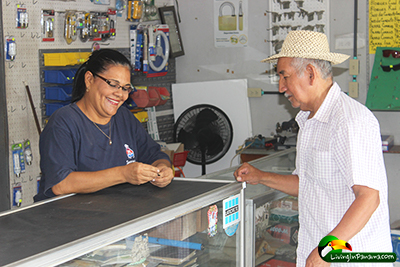
Remember when there used to be at least one “mom and pop” hardware store in every North American town, and dozens in a city? Sadly, most of these disappeared with the advent of home building supply super centers, such as Lowe’s and Home Depot.
Fortunately for us, the fast pace of life up north has not caught on in Puerto Armuelles yet. The family run hardware store (Ferreteria in Spanish) is still going strong in our town.
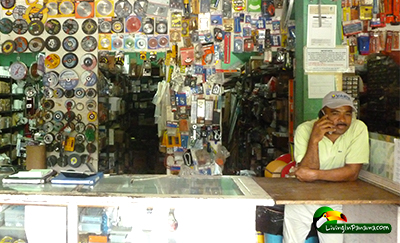
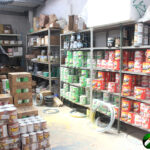
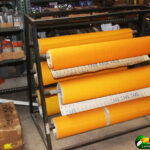
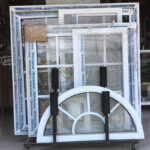
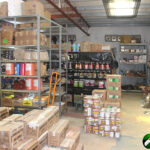
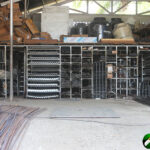
The local “ferreterias” are different from the small hardware store you may be used to. Our hardware stores sell absolutely everything that is required for constructing and maintaining a house (a Panamanian style house).
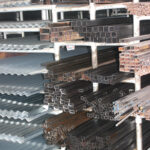
That is, they sell Cement, Concrete Block, Rebar, other Steel Sectional Shapes (such as angle, round tube, square tube), Sand, Gravel, Fill Dirt, Chicken Wire, Square Mesh, Rope, Chain, Adhesives, Sealants, Nails, all other hardware, Wiring, Paint, Knives, Machetes, Shovels, Picks, Hoes, Power and Hand Tools, etc. etc. etc….
Deliveries and Special Orders
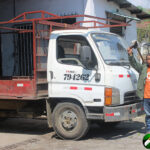
Same day delivery of large, or heavy products is available. For instance, if you order ten meters of gravel, and fifty sacks of cement, they can usually be at your delivery address within a couple of hours, at no extra charge.
If one limits one’s desires to what a typical Panamanian lives in, one can find everything one needs right here in town. Often within only a 2-3 minute drive of one’s house or building site.
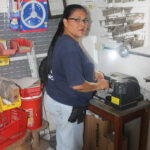
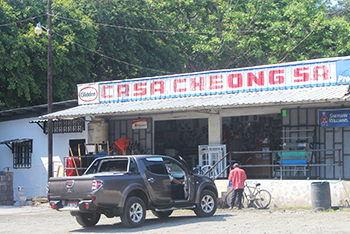
Check out these photos to get an idea of what a hardware store in Puerto Armuelles is like. These are photos of Casa Cheong. Click on any photo to enlarge and start the slideshow.
Below these photos, I mention my favorite hardware stores and the benefits of buying locally.
I have 3 favorite hardware stores:
Casa Cheong, right next to Romero’s supermarket at the North end of town. It is owned by Adriano Ching and ably run by store manager Daisy and her assistant Mari. Casa Cheong has a very friendly and helpful yard crew.
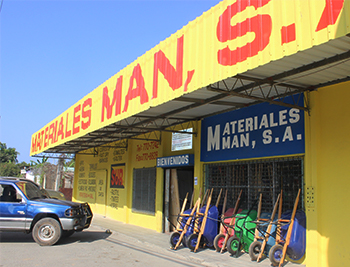
Materiales Man is at the far North end of town, on the south shore of the San Bartolo river. This is owned by Gustavo Man and is run by his niece Ebi, and her assistants Luis (“Chichi”) and Enrique.
Materiales Justavino is about five minutes drive north of town on the main road, past the “Y” intersection to San Bartolo. Folks call this area “La Cuchilla”. The owner Eivar Justavino, and his wife Eira, provide excellent service and products. This is the only place where I purchase concrete block. I have heard this same report from other expat builders.
Cement Blocks At Materiales Justavino
In our area, many of the hardware stores manufacture their own concrete blocks in tiny open air “plants”, usually in the back of their stores. While other yards skimp on the quality and cleanliness of the sand and cement that they put into their blocks, Sr. Justavino (correctly) predicted that he could corner the rapidly growing expat market for concrete products by maintaining a consistently higher quality than his competitors. He may charge a penny or two more per block than the competition, but it is more than worth the difference in cost, if you take into account the workability, and the greater confidence one has in the finished product.
There is a new ferreteria in town, Ferreteria Los Angeles. It is owned by the same family who owns Supermercado Puerto Armuelles. It is located about half a kilometer further north of town from Casa Cheong and Romero’s Supermarket.
I have only shopped there once or twice , since I like the ferreterias that I already support. I have not found the brothers who run it to be very friendly. However, I have heard good reports about this store from local builders, as well as expats, and I do buy there if one of my three favorite stores is temporarily out of a product that I need that day.
For me, as well as for some other expat builders with whom I have spoken, the idea of getting to shop for supplies right in our own little beach town, just as “in the good old days”, is a privilege that we do not take for granted.
This gift of a happier, easier lifestyle in our little town far outweighs the extra 10 - 20% that we may pay for materials bought from our local supplier in Puerto Armuelles, as opposed to buying them at a home builders center in Bugaba (45 minutes away) or David (an hour and 15 minutes away).
Of course, there are locals and expats who drive to the big super centers, so that they can get the very best price on materials, and perhaps find products that are not available in Puerto Armuelles. Admittedly, I, too, have gone to David to find certain products. Although, it is very rarely these days, since the local stores keep improving their stock (and they can special order anything for you.)
Thankfully, many of us like the idea of supporting the small businessmen and women who are our neighbors, and who help to make Puerto Armuelles the great small town that we have fallen in love with.
My personal conclusion is that if I continually drive to David for specialized materials I will incrementally, shopping trip by shopping trip, be “cashing in” the simple lifestyle that drew me to Puerto Armuelles in the first place.
Sure, I’ll get a better price and more products that I had become accustomed to obtaining in Seattle. But, in the long run, I will wind up with that same lifestyle that had, little by little, become too complicated for me to bear any longer. For myself, and my projects, I have decided that if a certain building material is not available in town, I do not need it. At least I don't need it enough to take my money out of our town, or to complicate my lifestyle like that.
I owned a design/build company in Seattle. One of my greatest professional assets here in Puerto Armuelles is that I don’t have to assign a dollar value to every single minute of my work day. Something I was forced to do back in the States.
I believe that if I shop at my local hardware store, it will stay in business. That way, I will always have the pleasure of shopping at my local hardware store for years to come. I know what life is like in places where all the “mom and pop” hardware stores have closed their doors, due to stiff price competition from the “big boys”. I don’t want to be part of helping that to happen to my new, adopted home town of Puerto Armuelles.
Shopping locally for building products is a win-win decision.
Update: During Panama's coronavirus quarantine, no one is allowed to leave their house on Sundays, including Easter Sunday. Easter 2020 will be very different throughout the world. For those missing community this day, reach out to family and services online. My family is doing a group zoom call on Easter. Your church is likely conducting services online. A Google search will uncover more services and ways to connect. Keep healthy!
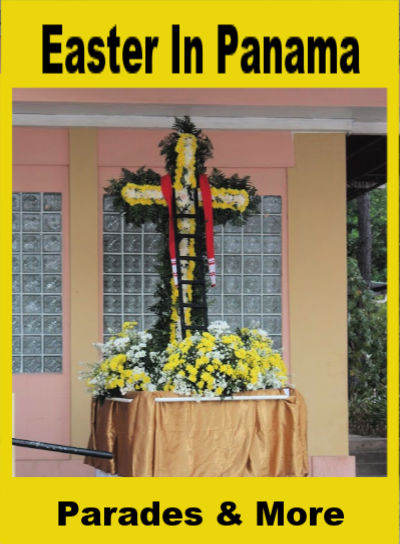
It is one of the most popular and celebrated holidays in Panama.
Semana Santa starts on Palm Sunday and ends 7 days later on Easter/Pascua Sunday.
During the weekdays of Semana Santa, the celebrations are noticeable solemn and religious in nature.
But on Holy Saturday and Easter Sunday, only the more religious remain solemn.
For the majority of people, all solemnity is shed on Saturday, esp. Saturday night, and on Sunday.
Come the weekend, spending the day at the beach, clubbing and drinking become the more popular activities. Of course, the powers that be encourage solemnity by banning alcohol sales from Thursday thru Saturday. (For more on alcohol & other bans, read further down.)
Easter is also the last holiday for 6 months in Panama. This could explain why the week-long holiday ends more in a party mode rather than in a solemn religious fervor.
The next holiday is in November. To make up for that 6-month long hiatus, the month of November celebrates 5 holidays.
Semana Santa also often marks the end of summer or the dry season. The rainy season usually begins in late April or in May.
Discover more about Panama's climate and weather.
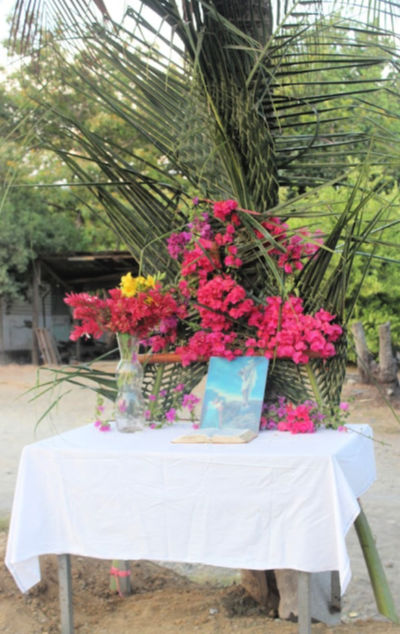
As I've indicated, Holy Week is a time for special masses, local religious processions dedicated to Mary, Jesus, a Saint, Jesus's last supper, crucifixion, or resurrection.
Every day of the week commemorates different things. I describe the most significant days below.
Palm Sunday - Celebrates Jesus’s return to Jerusalem after his 40-day fast in the desert. His followers laid down palm leaves before him to walk upon.
You won't see that. But you are likely to see people walking around with palms or palms woven into crosses after they leave the church on Palm Sunday.
Holy Wednesday - Church services typically include the reciting of the stations of the cross. Some churches put on a Passion of Christ play (aka Easter Pageant) to dramatically depict the stations of the cross. (Passion in this context means suffering).
The Stations of the Cross: There are 14 stations which represent various milestones of Jesus's last week of life (Holy Week). The first is of Jesus being sentenced to death by Pontius Pilate and the last is of Jesus being laid in his rock-hewn tomb.
Maundy Thursday - Commemorates Jesus's Last Supper and the command he conveyed to his disciples during the meal:
"A new commandment I give to you, that you love one another: just as I have loved you, you also are to love one another" (John 13:34).
For me, this command to love one another is the most important and essential element of Semana Santa.
Some churches have silent processions on this day while others hold reenactments of Jesus's journey carrying the cross. (Note: Maundy is a shortened form of the Latin word mandatum, which means command.)
Good Friday - Commemorates the crucifixion of Jesus Christ. All across Panama, you will find somber and religious processions to commemorate this event.
Some processions have floats, some visit the stations of the cross that parishioners have constructed in various locations on the procession circuit, and some do both.
Whether you are a believer, a photographer, or simply curious, you will find a Good Friday procession in almost every Panamanian town.
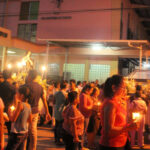
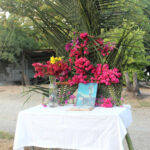
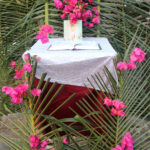
Below are photos of people gathering for the Good Friday procession to visit each of the stations of the cross which were created in various neighborhoods.
These photos were taken in Puerto Armuelles, Panama. The photos of the stations of the cross were taken in the day, before the procession. Click on any photo to start the slide show.
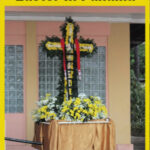
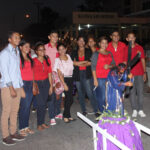
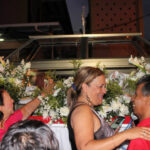
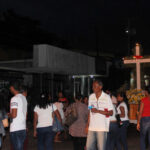
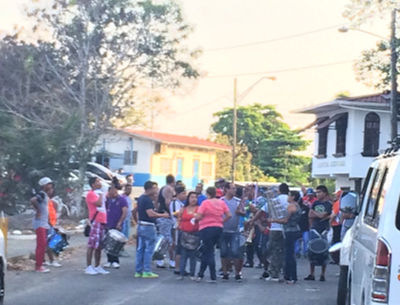
Holy Saturday - This is a day in which Jesus was is in his tomb. There is not much to reenact or do with around that. However, as the photo shows, not everyone goes to the beach.
Easter/Pascua Sunday - Big celebration of the resurrection of Christ. The day he rose from the dead. In the States, that is the big day for believers to attend church.
On Easter day in Panama, mass is held, of course. However, in Panama, believers are more likely to attend church multiple times earlier in the week.
The date of Easter changes each year. It can occur anytime from February through April. The exact dates vary in accordance with the lunar calendar.
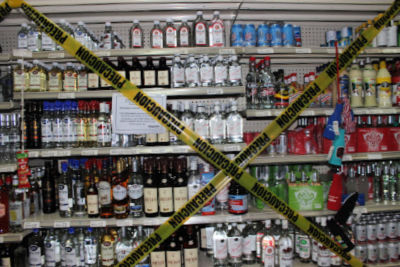
The following are prohibited from noon on Maundy Thursday thru 6pm on Holy Saturday:
If you want to have a drink during those 54 dry hours, you should purchase your alcoholic beverages before noon on Maundy Thursday.
Like all big holidays in Panama, people pour out of Panama City to go back “home” and then they flood back again. If you can avoid it, do not travel from Panama City into the interior on Wednesday or Thursday or in the reverse direction on Sunday.
Keep in mind, during Easter, Carnival and other big exodus holidays, the government tends to turn the Pan-American highway by Panama City into a reversible lane highway. Which means, trafffic will only be allowed to exit Panama City at the beginning of the holiday. Then when everyone heads back to the city to go to work, the section of the highway near Panama City will only allow city-bound traffic. Check the news before you travel.
Everyone gets a four-day weekend. There are 3 public holidays during Holy Week: Maundy Thursday, Good Friday, and Holy Saturday. Most people also get a half day off on Holy Wednesday too. Mostly, because nobody's mind is on the job before this big family holiday so their employers just send them home.
You will find all government offices and many establishments closed during this 4 to 5 day weekend.
There are a number of foods that are special for the week of Semana Santa.
This article is long enough, so I write about Panama's Easter foods in a different post.
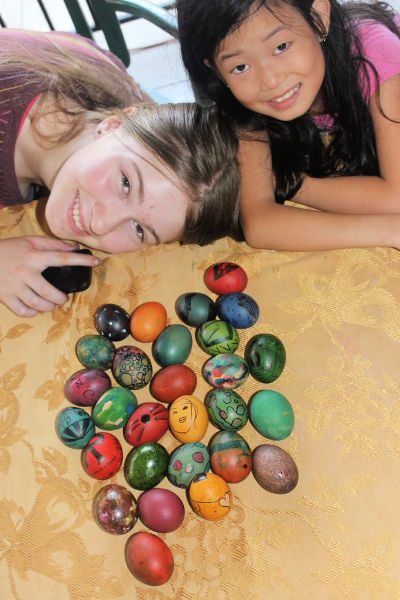
In the last few years, you can find easter decorations and related items in Panama.
But it is not prevalent or even found in all places in Panama. If you are searching for something as specialized as a chocolate Easter bunny, your best options will be found in Panama City or in places where there are a number of expats.
If you want to participate in an egg hunt, your best option may be to host one yourself.
My kids grew up in Panama, creating a more American-like Easter is a challenge. When we first came, I could not even find food coloring to use to dye our eggs. Turned out it was fun to discover our own dyes. We love dying eggs in my family.
To find out what we do, see my article on how on expat kids celebrate Easter in Panama.
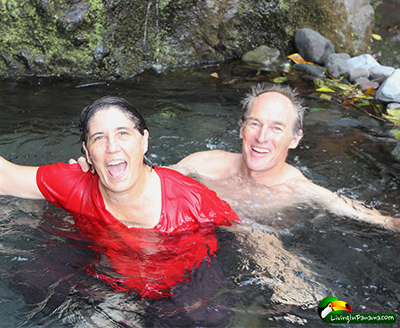
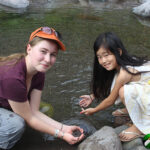
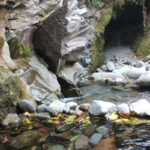
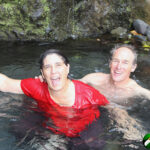
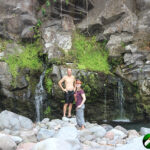
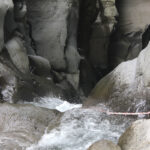
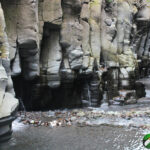
You can see us playing in the river (Rio Macho de Monte) as it runs through the canyon.
The trip reminded me how small and easy it is to explore Panama, and Chiriqui Province in particular.
Business & Pleasure
We wanted to go play in this cool mountain river (see photos), but we also had to meet with a lawyer in David. So we combined the trip.
Day Trip
Home - Beach - City - Mountains - Home again
After Reyn and I returned from our morning surf/boogie board at the beach, all four of us piled in the car. We left Puerto Armuelles at around 10am. We drove to David to meet with the lawyer.
Then we decided to drive past the canon turn off, and go all the up to Volcan to eat lunch. We like the food at Restaurante Mana at the Volcan Lodge. A 15 mile round-trip detour.
After filling our bellies, we went back down to the little village of Cuesta de Piedra, where you turn off to go to Canon Macho de Monte. (I describe how to get there at the bottom of this page and I show what it is like there in photos below.)
We had a delightful and leisurely time playing in the water and boulder hopping. Then we headed back to Puerto Armuelles. We got home before dark (It gets dark around 7pm these days). A very eventful, fun, and even productive day trip.
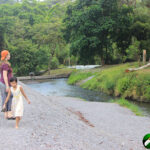
I had been wanting to check out this canyon for awhile. From the road it is a short walk to the canyon bottom. The trickiest part is that a huge hill of sandy gravel shares the path down, so it is a bit slippery.
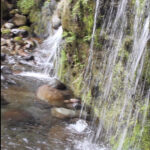
In the slow part of the river there were tadpoles that my kids enjoyed catching. A pool to dunk yourself in. Boulders to hop to get to the fissure where the water runs faster and cascades down even further. People have secured a rope right there so you can play in the rapidly tumbling water, but I loved dunking myself in the cold water. Now that I have gone, I want to come back in the rainy season.
The photos below were taken towards the end of the dry season (mid-March). I look forward to going back in the rainy season. I am sure the water flow is much more dramatic and exhilarating.
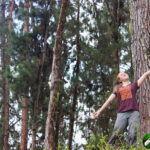
Take the road up to Volcan. You turn off the InterAmericana onto the Volcan road at the town of Bugaba. There is a sign marking it on the InterAmericana. The turn off for the Canon is at the tiny village of Cuesta Piedra, about 7.5 miles or 12 kilometers south of Volcan.
If you are heading north (or uphill) towards Volcan, there is a sign marking the turn for Canon Macho de Monte in Cuesta Piedra. No such luck if you are heading down from Volcan. The turn is at an intersection with a gas station (photo below) and a few other commercial buildings. You can only turn one way. There is no road going the other direction.
I have put photos below of some key places to look for so you know where to turn, park, and walk.
You will drive on that road for less than 3 kilometers. Look for the guard house for the hydroelectric plant. It will be on your right, as you head down a hill. As you down that hill you will see a ruin of a building on your left (see photo below). Park there. Then walk down the road and take the trail (see photo) just before you cross the bridge over Rio Macho de Monte. As I've said, the trickiest part of the short walk to the canyon bottom is that a huge hill of sandy gravel shares the path down. It is a bit slippery. It is a short walk.
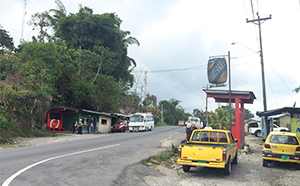
Reyn describes day trips from Puerto Armuelles in a past post. He talks about going for hikes in Cerro Punta.
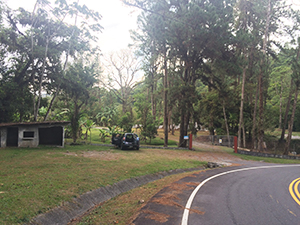
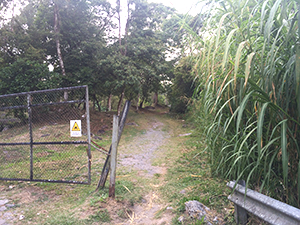
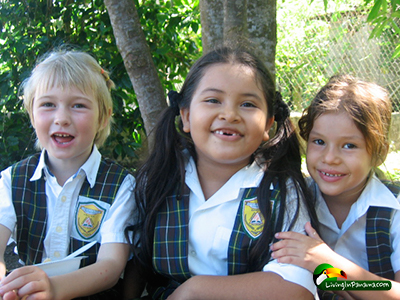
Although, the longest that I ever attended one of these schools was four months. This is because the style of teaching is so different from what it is in the US.
In the schools here, the teacher has the only text book in the class. So a lot of the time spent in class is occupied with either copying your down your lessons off the white board, or
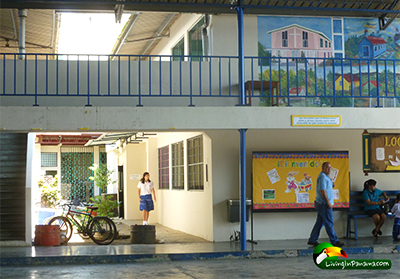
copying down your homework. For some reason the school system seems allergic to printing out worksheets.
I've heard from several of my friends that still attend school here, that they only go to school to see their friends. The quality of learning leaves much to be desired, and the curriculum is mediocre at best.
The students learn math and history and the other essentials, but the there seems to be no emphasis on reading or continuing your education beyond high school.
There are good things too, for example in some schools you can play a variety of sports and can learn many of the traditional dances. All the schools have a marching band, and they all participate in a yearly city parades.
If you're looking into schools here there are a few things you might want to know.
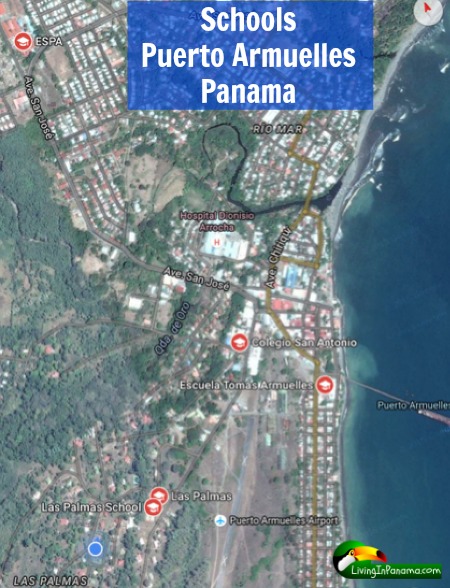
First, of all the schools here Escuela Secondario de Puerto Armuelles (ESPA) is the largest and most highly recommended in town. From what I've heard it also has the highest standard for learning. It is also the only one with a band with instruments, other than the drum and xylophone.
You may also want to read a post I (Betsy) wrote about schools in Panama. It includes a short video of my daughter Skylar in her 1st grade class here in Panama.
Among the other schools here, the one I attended most recently was San Antonio. San Antonio is known as one of the higher profile schools in town. This school is a three in one: elementary, middle, and high school, all in one large building. It has kept up a reputation as a fairly good school for the last 50 years. However it's elementary school is known to be poorer quality then some of the others in town. The middle school is supposed to be one of the best. San Antonio was the school that made me
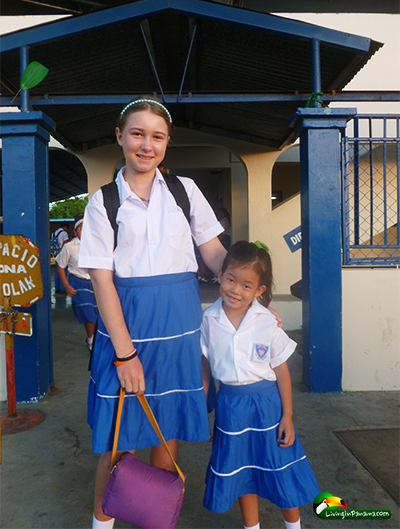
decide that the Panamanian school system was not for me.
The last school on this short list is the Las Palmas school, which is located, of course, in the Las Palmas neighborhood. This is the school I have attended most frequently, three times to be exact.
My take-away from the Las Palmas School is that it is highly over-estimated. A couple of decades ago, at the end of the Chiquita years, the Las Palmas school was the best in town. And now over twenty years later people still believe it to be one of the best schools.
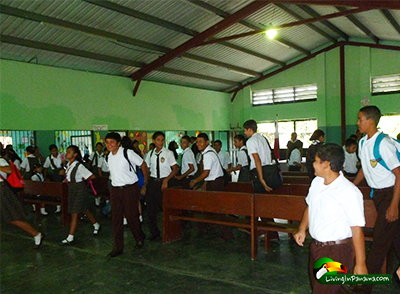
However the truth is that with the contribution of bad principals and teachers, the school has deteriorated. This school is supposedly bilingual, but from my experience the school's English teachers speak worse English then an American five year old. That may be a bit harsh, but it's the truth.
The students I've met that have attended the Las Palmas school can barely string together a sentence in English.
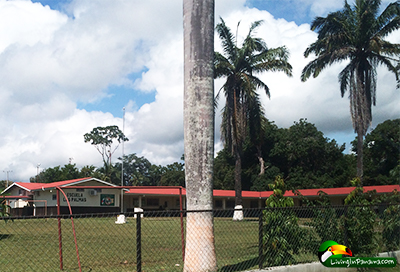
Oh fun fact before I go, the original Las Palmas school building was burnt to the ground, maybe in hopes of erasing it from the school system. But is was rebuilt, and sadly still features ever the decreasing teaching and learning standards taught there.
This is, of course, only a brief summery of the most popular schools here in Puerto.
I have provided a list of all schools in Puerto Armuelles at the end of the article, as well as
their geographical locations.
If you can't find one of the schools on the map you may have to ask around town.
If you would like more information about a particular school ask me in the comments.
Thanks for reading.
Skylar.
This article was written by my 14 year old daughter, Skylar Vayda. Over the winter, Skylar will be writing a Panama-related articles. She will be picking the topic. We hope you enjoy them.
P.S. School starts here in just a few days -Monday, Feb. 29, 2016.